
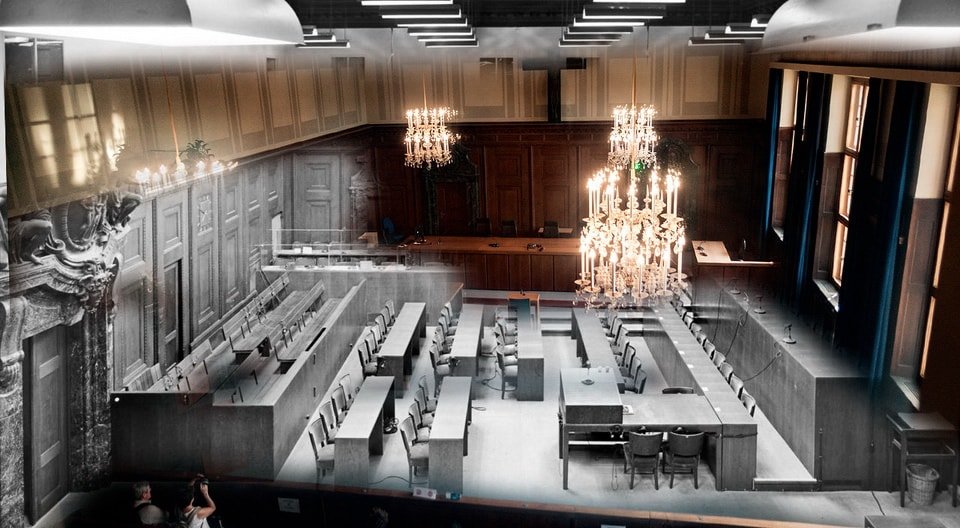
The Inception of International Defense
An Interview with Dr. Mark S. Ellis
Edited by Emma Bakkum & Paul Williams
A Note on Defending Justice
This blog is part of the Defending Justice series, an initiative of the Public International Law & Policy Group (PILPG) to promote an eclectic array of voices within the field of international criminal law.
As part of our broader efforts to strengthen institutions of justice, this series seeks to create space for dialogue around the varied perspectives and concerns that shape these institutions. With that aim in mind, we interviewed a series of defense practitioners working in international criminal law and distilled their experiences and insights into a series of first-person blogs, preserving the spirit and voice of those interviews.
Editor’s Note
This blog delves into the origins and evolution of the work of defense counsel before international criminal tribunals. It presents the reflections of Dr. Mark Ellis, based on his extensive experience providing assistance to the International Criminal Tribunal for the former Yugoslavia (ICTY), his active involvement in the Saddam Hussein trial in Iraq, the Extraordinary Chambers in the Courts of Cambodia (ECCC), and the International Criminal Court (ICC), and his service as Executive Director of the International Bar Association (IBA). Through the examination of key defense developments, including the financial remuneration of defense counsel, assigning and selecting defense counsel, defense counsel ethics, and the role of bar associations, this blog traces the evolution of the defense counsel’s role in international criminal law, showcasing how defense contributions have shaped the fabric of international justice. Starting at the formative days of defense at the ICTY, including in the landmark Tadić case, the blog presents first-hand accounts of the key challenges and milestones faced by defense counsel appearing before the ICTY and beyond, illuminating key developments of the defense at international criminal tribunals, and laying the foundation for understanding the broader international justice system.
Introduction
While the idea of international criminal justice institutions dates back to the aftermath of the First World War, it was only after the Second World War that the first international criminal courts, the Nuremberg and Tokyo International Military Tribunals, were established, aimed to address war crimes, crimes against peace, and crimes against humanity committed during the war. These tribunals laid the groundwork for future international criminal justice mechanisms. Large-scale atrocities committed in the former Yugoslavia and in Rwanda in the 1990s led to the establishment of two ad hoc international tribunals (the ICTY and the International Criminal Tribunal for Rwanda; ICTR), set up by the United Nations in 1993 and 1994, respectively. Following the ad hoc international tribunals, the international community experimented with other formats: hybrid courts, such as the Special Court for Sierra Leone (2000) and the Special Tribunal for Lebanon (2007); and special or extraordinary chambers embedded within national systems, like the Extraordinary Chambers in the Courts in Cambodia (2003) and the Special Panel for Serious Crimes in East Timor (2002).
Meanwhile, discussions of an independent international criminal tribunal emerged after both world wars, but became more realistic with the end of the Cold War, when the easing of geopolitical tensions fostered renewed multilateralism and revived the international community’s concern with impunity. Several rounds of negotiations culminated in the adoption of the Rome Statute, the founding treaty of the International Criminal Court (ICC), in July 1998. The Statute entered into force on July 1, 2002, after 60 countries ratified it. The ICC became the first treaty-based, permanent international criminal court to help fight impunity by investigating and, where warranted, prosecuting individuals charged with the gravest crimes of concern to the international community: genocide, war crimes, crimes against humanity, and the crime of aggression.
I have been involved in the field of international criminal justice since 1995. My journey into defense work started at the ICTY and in the Tadić case. Thirty-six years ago, Justice Richard J. Goldstone, the founding Chief Prosecutor of the ICTY, set out the importance of Tadić receiving a fair trial and a proper defense. That principle has been the north star throughout my career in international law, including ensuring that fair trial rights, through adequate and effective defense, remain central in international and domestic criminal trials.
Following the Tadić case, I have served in several positions advising on high-profile international criminal processes. I served as Legal Advisor to the Independent International Commission on Kosovo, chaired by Justice Goldstone. I was appointed by the Organization for Security and Co-operation in Europe (OSCE) to advise on the creation of Serbia’s War Crimes Tribunal. I was involved with the Iraqi High Tribunal and acted as legal consultant to the defense team of Nuon Chea at the ECCC. In 2000, I was appointed Chair of the Advisory Panel of the ICTY. In 2013, I was admitted to the List of Assistants to Counsel of the ICC. In 2015, I also served as Chair of the UN-created Advisory Panel on Matters Relating to Defense Counsel of the International Residual Mechanism for Criminal Tribunals (previously the ICTY and ICTR).
I currently serve as the Executive Director of the International Bar Association (IBA), leading the foremost international organization of bar associations, law firms, and individual lawyers. My current focus is specifically on the IBA’s assistance to Ukraine, which includes legal support for war crimes accountability, technical assistance and capacity-building for judicial institutions, and support for justice reform and reconstruction efforts. In addition, I serve as an advisor to the ICC on sanctions issues. Prior to joining the IBA, I served for ten years as the Executive Director of the Central European and Eurasian Law Initiative (CEELI), a project of the American Bar Association (ABA). As part of this initiative, I provided technical legal assistance to twenty-eight countries in Central Europe and the former Soviet Union, as well as to the ICTY in The Hague. To this day, CEELI remains one of the most extensive international pro bono legal assistance projects ever undertaken by the US legal community.
Throughout these experiences, I witnessed the role of defense counsel grow in importance over time. As international criminal cases became more complex, the overall organizational structure for international defense improved significantly and financial support increased. Challenges invariably remain. Nevertheless, the evolution of international defense since the early years of the ICTY is remarkable and yields critical lessons for the way forward.
Early Years at the ICTY: The Tadić Case
The International Tribunal for the former Yugoslavia
The ICTY was established in 1993 in response to the conflicts in the former Yugoslavia in the 1990s, specifically the mass atrocities taking place in Bosnia and Herzegovina and Croatia. I lived in the former Yugoslavia from 1985 to 1988, having been awarded a Fulbright Scholarship.
Reports of horrendous crimes, including the killing and wounding of thousands of civilians, torture, sexual abuse, and forced displacement, led to global outrage and prompted the UN Security Council to act. In accordance with Chapter VII of the UN Charter, the UN Security Council established the ICTY in May 1993. The ICTY was the first ever international criminal tribunal established by the UN, and the first international war crimes tribunal since the Nuremberg and Tokyo tribunals.
Based in The Hague, The Netherlands, the ICTY’s mandate was to prosecute those individuals most responsible for serious international crimes such as murder, torture, rape, enslavement, destruction of property, and other crimes listed in the Tribunal’s Statute, committed in the former Yugoslavia since 1991. By bringing perpetrators to trial, the ICTY aimed to deter future crimes and render justice to thousands of victims and their families, thus contributing to a lasting peace in the former Yugoslavia.
Throughout its operation, the ICTY indicted 161 persons; all cases were completed by the time the Tribunal closed in 2017. The ICTY indicted heads of state, prime ministers, army chiefs of staff, interior ministers, and many other high- and mid-level political, military, and police leaders from various parties to the Yugoslav conflicts. The ICTY transformed the landscape of international humanitarian and criminal law by establishing groundbreaking legal precedents, expanding the scope of international criminal accountability, and reinforcing the principle that no one is above the law.
The ICTY officially closed its offices on December 31, 2017. The International Residual Mechanism for Criminal Tribunals (IRMCT), created by the UN Security Council in December 2010, assumed responsibility for a number of essential functions previously carried out by the ICTY and ICTR (which had closed in 2015). In doing so, the IRMCT maintains the legacies of the pioneering ad hoc international criminal tribunals and aims to reflect best practices in international criminal justice. In 2024, the IRMCT reported on a historic turning point for the Mechanism with the conclusion of all core crimes cases and fugitive tracking.
The closing of the ICTY as a standalone institution and the recent reduced activity of the IRMCT mark the end of a period in international criminal justice shaped by the ad hoc tribunals, which also transformed the landscape of international defense work. The end of the ICTY experiment calls for a reflection on the formative days of the role of defense counsel.
The Start of Defense Counsel at the ICTY
The ICTY website highlights the crucial role of defense counsel: “a competent defense upholds equality of arms between the Prosecution and the Defense, thereby ensuring the fairness of the proceedings.” Interestingly, defense lawyers were not directly involved in the creation of the ICTY. Their role only became integral during the development of the ICTY’s Statute and Rules of Procedure and Evidence. From that moment, it became clear that defense attorneys would be critical to the Tribunal’s success.
However, defense counsel faced several challenges in the early years of the ICTY. When the ICTY became operational, it had no defendants. The true catalysts for defense came from the first case at the Tribunal: the Tadić case. Duško Tadić, a Bosnian Serb and President of the Local Board of the Serb Democratic Party in Kozarac, was accused of participating in crimes committed against Bosnian Muslims and Croats in the Prijedor region of Bosnia and Herzegovina during the war in the early 1990s. He was accused of crimes involving the abuse and torture of detainees in concentration camps. Tadić faced multiple charges, including crimes against humanity, grave breaches of the Geneva Conventions, and violations of the laws and customs of war. In 1997, after a total of 79 trial days, Tadić was convicted of wilful killing, torture or inhuman treatment, and murder. The Trial Chamber found, among others, that Tadić participated in the collection and forced transfer of civilians to detention camps, the killing of two Muslim policemen, and the participation in the killings of five men. He was sentenced to 20 years in prison.
The Tadić case was remarkable in numerous ways. Not since the international military tribunals established in Nuremberg and Tokyo after World War II had perpetrators been held accountable for international crimes before an international tribunal. The case set important legal precedent in international criminal law, including by providing definitions of war crimes and crimes against humanity, by expanding the scope of war crimes that could be prosecuted at the international level, and by contributing to the principle of command responsibility, which says individuals in positions of authority can be held accountable for actions of subordinates if certain elements are proven.
Once Tadić was transferred to The Hague, a crucial yet unclear question was the engagement of defense lawyers. As the first indigent defendant in a modern international criminal law trial, Tadić’s attorneys were assigned, which was the first time the Registry had to do so.
A year before the start of Tadić’s trial, I traveled to The Hague for a meeting with Justice Richard J. Goldstone. Justice Goldstone was a prominent South African judge and the first Chief Prosecutor for the ICTY and ICTR. At this point, he was setting up the prosecution offices for these pioneering tribunals, in which he played an instrumental role. During the meeting, I offered CEELI’s full support to the new Prosecutor in his first trial. Justice Goldstone, however, wanted me to assist with training the defense teams. Justice Goldstone recognized the importance of the fairness of the proceedings and was concerned that the defense did not have sufficient resources. He once noted during an address: “There is no question that history will judge the Tribunals for the former Yugoslavia and Rwanda on the fairness or unfairness of their proceedings. Whether there are convictions or whether there are acquittals will not be the yardstick. The measure is going to be the fairness of the proceedings.”
I agreed to assist with training the defense teams. It is a credit to Justice Goldstone that, as the Prosecutor, he sought to ensure the defense had sufficient support and resources. I fully leaned into ensuring that defense had the resources to provide effective representation for suspects and the accused.
Tadić’s Defense Team and Initial Challenges
Defense Team Structure
I became convinced that the best approach to the defense was to assemble a diverse team of international and local (co-)counsel. This naturally creates the strongest team. When the Tadić trial started, the selection process for counsel at the ICTY was included in the original 1994 Directive on Assignment of Defense Counsel and was relatively straightforward. An attorney had to meet several requirements, including being admitted to a state bar or being a law professor, and having fluency in one of the Court’s working languages (French or English).
The initial counsel of Tadić were not schooled in the common law system. Partly because the ICTY was based in The Hague, some of the early defense counsel were, in fact, Dutch. Professor Michail Wladimiroff, one of the Netherlands’ most respected criminal lawyers, was assigned as lead counsel for Mr. Tadić. Mr. Wladimiroff had impeccable credentials. He selected Alphons Orie, another superb lawyer, as his co-counsel, who later became a respected judge with the ICTY.
I spoke to John Heffernan, director of the Coalition for International Justice, and we decided to initiate a training program for both Wladimiroff and Orie. I reached out to a good friend in the US, Joe Jones, who was a well known criminal lawyer. In turn, he suggested another American criminal lawyer, Carol Bruce, and a UK barrister, Steven Kay KC, a leading English barrister, to join the training team. With the assistance of another great American lawyer, Alain Norman, we created an extensive week-long training seminar focused on adversarial techniques, recognizing that the ICTY’s procedures and practices would lean heavily on common law traditions. The training seminar took place at the Peace Palace – a stunning building in the heart of The Hague and the home of the International Court of Justice (ICJ). Because Wladimiroff was recovering from a back injury, we trained Orie in the Palace and Wladimiroff at his home while he was in bed! Both of them quickly picked up cross-examination techniques. However, they also recognized their own lack of experience in an adversarial trial. Thus, it was felt that it was essential to add a common law barrister to the defense team.
At the end of the training week, I visited the ICTY’s Registrar, Dorothée de Sampayo, and asked that a common law barrister be added to the team. I had earlier sought Justice Goldstone’s approval. One of the arguments I made was that at the time, the prosecution trial team had a mix of five Australian/US counsel, and there was a need for “equality of arms” (see below on equality of arms). To her credit, the Registrar agreed, and Stephen Kay was added to the defense team. Mr. Kay even agreed to take a substantial reduction in his fee. Another talented UK barrister, Sylvia de Bertodano, had recently completed her pupillage at the English bar and joined earlier as an assistant to the Dutch lawyers. Immediately, Mr. Kay took responsibility for cross-examining witnesses, while Mr. Wladimiroff and Mr. Orie continued to direct the overall case and advance arguments.
Additionally, since the start of the ICTY, a transformation occurred in which lawyers from conflict situations joined the defense team. This has generally been a positive development. However, for the Tadić trial, the Serbian lawyers that Tadić had added to his team on his own were not working out. Consequently, Mr. Wladimiroff and Mr. Kay worked to have all of them removed from the team, which Tadić agreed to. While the skills used in a domestic criminal case are obviously relevant, they do not necessarily include the legal background required for a complex international war crimes case. Back then, the average attorney simply was not schooled in this practice.
Because of the ICTY’s elaborate Rules of Procedure and Evidence, as well as its numerous directives, these attorneys found themselves unfamiliar with the ICTY and its procedures. However, the team did utilize local investigators, including Tadić’s brother and another local – Dragan Petrovoc, who had worked with a documentary crew and “fixer” in the local Yugoslav region.
The overall solution in the Tadić case was to blend co-counsel familiar with common law and civil law, with both having experience in international criminal law. Each brought his or her own unique expertise and experience. Had a common law lawyer not been added to the Tadić defense team, the trial would have been viewed entirely differently. The Wladimiroff/Orie/Kay defense team approach became the paradigm for international war crime tribunals.
Equality of Arms
Ensuring the basic tenets of a fair trial remain crucial at international criminal tribunals. The principle of equality of arms between the prosecution and the accused goes to the heart of the right to a fair trial. The importance of defense rights is premised on the equality of arms principle. This was a pivotal issue during the Tadić trial, and the trial influenced the interpretation and application of the principle of equality of arms in international criminal proceedings.
Equality of arms is not just achieved through the assignment of defense counsel. The defense teams at the ICTY faced serious challenges due to insufficient resources. The resources available to defendants, both in preparation for and during a trial, are fundamental to justice through due process.
For instance, low remuneration for defense lawyers and limited support for their travel and witness interviews are relevant examples. In fact, the defense counsel for Mr. Tadić argued that there was no equality of arms between the prosecution and the defense at trial, which seriously affected the preparation of the case and therefore frustrated the right to a fair trial. The inability to gain access to evidence and enter key villages and towns in hostile states necessary to build the defense’s case had weakened counsel’s ability to represent their client effectively.
The ICTY Appeals Chamber referenced jurisprudence from the European Court of Human Rights (ECtHR), affirming that equality of arms encompasses the right to adequate time and facilities for the preparation of the defense, as outlined in Article 21(4)(b) of the ICTY Statute.
In my research and through interviews with defense counsel and the Registrar, I learned that defense counsel’s access to the region of the former Yugoslavia greatly diminished over the years following the first case. Yet, the Tadić case and the decisions made reinforced the importance of procedural balance.
I have said many times that the ICTY would be judged by the fairness of its proceedings and by the certainty that the accused received a fair trial and proper defense. Ultimately, no one has questioned the outcome or legitimacy of the Tadić trial, precisely because equality of arms was ensured through the assignment of defense counsel. Justice Goldstone has reiterated this view on several occasions, stating that without the support given to the Tadić defense team, the trial would not have been fair.
The Evolution of Defense Counsel before the ICTY and ICTR
Key lessons learned from defense in the Tadić case continued to guide my work with defense teams and to influence defense work at the ICTY and ICTR. As the number of cases before the ICTY grew following the Tadić case, the role of defense counsel evolved. The evolution of defense counsel can be witnessed through developments in several areas, including remuneration, assignment and selection, ethics, and the role of civil society.
The Financial Position of Defense Counsel
Remuneration for defense counsel is one area that drastically changed over the years. Thankfully, defense counsel salaries at the ICTY and ICTR substantially improved following the first ICTY case against Duško Tadić.
The original 1994 Directive on the Assignment of Defense Counsel (amended several times since) provided for limited remuneration for defense counsel. Counsel in the Tadić case was paid a fixed rate of $800 for the entire trial ($400 for each stage of the trial) and a daily rate of only $200 per day. As I have written in “The Evolution of Defense Counsel Appearing Before the International Criminal Tribunal for the Former Yugoslavia”, the remuneration in the Tadić case was hardly commensurate with the amount of time devoted to the case. Assigned Counsel spent 12 to 14 hours a day, six days a week, completing pre-trial and trial work. Counsel prepared for more than 85 cross-examinations and over 35 direct examinations of defense witnesses. When calculated based on a seven-and-a-half-hour workday, the lead defense counsel was paid $26 per hour, which also covered general administrative costs for the counsel’s office. Tadić’s counsel, Mr. Wladimiroff, waived his usual fees to meet the ICTY’s payment schedule.
After Tadić, compensation for counsel at the ICTY and ICTR generally improved. The Directive, amended in 2000, raised the fixed rate from $400 per trial stage to $2,000. The fixed daily rate was also raised considerably. In the early 2000s, depending on years of experience, lead counsel at the ICTY were remunerated at rates between $80 and $110 per hour, up to a maximum of 175 hours per month. An experienced counsel could earn more than $230,000 per year. Expenditures such as phones, mailing, office equipment, rent, fax services, and secretarial support were included in the payment to counsel of fees and costs.
The Legal Aid Policies for the pre-trial, trial, and appeal stages later provided a more detailed payment scheme. They outlined the fixed rates for each phase of the proceeding, grouped into three levels of complexity (difficult, very difficult, and extremely difficult). The pre-trial stage policy provided for fixed rates, while the trial and appeal stage policies provided for a fixed rate per month depending on the difficulty of the case.
The Assignment and Selection of Counsel
The assignment and selection of defense counsel were established in the Statutes of the ICTY and ICTR, which referred to a right of the accused to communicate with “counsel of his or her own choosing” in Article 21(4)(b) and Article 20(4)(b) respectively. However, the right to counsel of an accused’s choosing was not without limits. The ICTY and ICTR generally left the administrative task of selecting counsel to the Registrar’s discretion, particularly to ensure that the counsel chosen met the criteria for assignment. However, in reality, the accused had great latitude in selecting his own counsel. In fact, there had rarely been a refusal of a request for assignment of counsel of choice during the ICTY’s history.
The Directive on the Assignment of Defense Counsel further governed the procedures for the assignment of defense counsel. The original Directive from 1994, in Article 16(A), entitled the suspect or accused to one attorney as assigned counsel only. The word “one” was interpreted literally. However, due to the enormous amount of work involved and the complexity of the Tadić case, as mentioned earlier, I successfully petitioned the ICTY for an additional defense attorney. The then ICTY Registrar reasoned that the Directive, while limiting counsel to one counsel, nevertheless allowed discretionary use of funds to secure the services of a defense counsel consultant.
In 1996, following the Tadić trial, the Directive was amended to allow the assignment of a second counsel to the accused under exceptional circumstances. By 2000, the ICTY further relaxed its co-counsel rules, allowing co-counsel more routinely, along with support staff such as investigators, translators, and language assistants, to manage the vast documentation involved. Article 16(C) of the Directive provided that the Registrar may, in the interests of justice and at the request of the lead counsel, “assign a second counsel to assist with the defense [...].” The Directive clarified the distinction between lead counsel and co-counsel too: acting under the authority of the lead counsel, the co-counsel may deal with all stages of the proceedings and all matters arising out of the defense. Article 16(D) further allowed the Registrar to “assign a co-counsel who does not speak either of the two working languages of the Tribunal but who speaks the native language of the suspect or accused.” Finally, Article 16(E) provided for the assigning of “other persons such as legal assistants, consultants, investigators and interpreters, as required, to provide support to counsel.” The article clarified that the lead counsel and the persons assisting him shall be referred to as the defense team.
Defense Counsel Ethics
The ICTY faced serious challenges in regulating ethics and discipline among defense counsel, given the diverse legal backgrounds of defense counsel from various countries. For instance, a system of “fee-splitting” emerged, in which the defendant appointed lawyers from the former Yugoslavia, with a portion of the lawyers’ fees paid to the defendant’s family. Unlike domestic systems with bar associations, the ICTY lacked a unified regulatory body. To address this, it introduced a Code of Professional Conduct in 1997, based on Rules 44–46 of its procedural framework, and subsequently amended it a few times.
The Code was drafted by judges (not lawyers) and heavily influenced by national models, especially the ABA’s Model Rules. The Code, substantially revised in 2002, aimed to clarify defense counsel’s rights and obligations, restrictions and responsibilities, govern aspects of counsel’s work, such as confidentiality and conflicts, and to impose a disciplinary regime, including a Disciplinary Panel. A similar Code was introduced at the ICTR, and the ICTY code influenced the development of the ICC’s Code of Professional Conduct for Counsel.
Role of Civil Society
The Tadić case was not only a legal milestone but also a starting point for civil society engagement in international justice. During the Tadić trial, a number of platforms and networks of civil society collaboration (e.g., CEELI) were heavily involved and played a crucial role by promoting transparency, advocating for victims’ rights, and shaping public discourse.
Civil society also recognized the importance of an effective defense as a component of a fair trial, which was crucial to the development of the defense. Several NGOs provided research or offered legal expertise and training to defense teams, recognizing the need for competent defense lawyers. Some NGOs advocated for procedural fairness and equality of arms, indirectly supporting defense teams by urging the ICTY to improve resources, transparency, and access to evidence.
Regarding the ICC Code of Professional Conduct, the IBA undertook a rigorous drafting process through an international Advisory Panel of legal experts.
Association for Defense Counsel
Finally, a milestone development for the defense counsel was the establishment of the Association of Defense Counsel for the ICTY (ADC-ICTY). With the conclusion of the first trial, during which support for the early defense team was provided through a training program developed by CEELI, it became evident that it would be helpful for defense to consolidate formally, and in a way that would allow them to advocate for their interests. The ICTY judges saw a need for an association for the defense for several reasons. First, such an association could ensure a higher quality of defense counsel. Second, it could make collective representations to the ICTY on behalf of all defense counsel involved in cases. Third, it could deal with ethical and disciplinary issues. After more than a year of work by a special ad hoc working group, the ICTY established the Association of Defense Counsel of the ICTY in September 2002.
The judges amended the ICTY’s Rules of Procedure and Evidence, making membership of a recognised association of counsel a necessary requirement for inclusion on the so-called Rule 45 List (list of qualified counsel). This requirement can be found in Rule 44 of the ICTY Rules of Procedure and Evidence.
In December 2016, the General Assembly of the ADC-ICTY voted to adopt an amended Constitution which renamed the Association as the “Association of Defense Counsel practicing before the International Courts and Tribunals” (ADC-ICT). The ADC-ICT’s objectives include supporting the functioning, efficiency, and independence of defense counsel, promoting and ensuring the proficiency and competence of defense counsel, and overseeing their performance and professional conduct. It is the only official association of defense counsel that has practiced before the IRMCT. Lawyers admitted to the ICC List of Counsel are represented by ICCBA.
The Arc of International Defense and Way Forward
Following the armistice that ended World War I, the Treaty of Versailles committed the signatories to try Kaiser Wilhelm II for his crimes. Although he was never brought to justice, it would be the first time in history that nations imagined the possibility of an international tribunal. The ICTY, ICTR, and the ICC are a testament to that early vision.
In the 30 years since the UN Security Council created the ICTY, the international community has seen the field of international criminal law and the institutions within it steadily solidify, ultimately leading to the establishment of the ICC. The role of the ICTY and the ICTR in this evolution of legal thought cannot be underestimated. The ICTY’s achievements, in both substantive and procedural law, have established legal standards, and its perceived success is undoubtedly a major reason for the creation of the ICC.
ICTY and ICTR
Reflecting on my experiences, those early years at the ICTY showed a propensity to adapt to changing circumstances and needs. Representing those accused of some of the most heinous crimes of the past century was one of the most crucial aspects of the Tribunal. Yet, at the formation of the ICTY, issues addressing the needs of the defense counsel were not a priority for the newborn tribunal. However, because of the foresight of the ICTY’s first prosecutor, Richard Goldstone, and the Registrar, Dorothy de Sampayo, issues related to the defense counsel slowly gained greater importance.
Although the years that followed have not been a panacea for all of these issues, the overall structure of the defense counsel significantly improved at the ICTY and ICTR. For instance, as described in this blog, the financial support for defense counsel at the ICTY improved. The number of assigned counsel and support staff provided to indigent defendants also increased. And, although not required, the ICTY adopted a liberal policy permitting the accused to select any available counsel qualified to appear before it.
The ICTY also made progress in strengthening the integrity of the defense structure: the adoption of a code of professional conduct for defense counsel represented a milestone in countering allegations of ethical misconduct by assigned counsel. Finally, one of the hallmark developments was the formation of the Association of Defense Counsel of the ICTY.
International Criminal Court
These ICTY-specific defense developments significantly influenced the ICC’s defense framework. The ICC’s framework reflects several lessons learned from the ICTY and ICTR regarding defense issues, including the selection and assignment of defense counsel, defense counsel fees, and counsel ethics.
First, the ICC implemented a similar system of selecting defense counsel. The ICC’s Registrar oversees a list of approved counsel who meet the criteria set out in the Rules of Procedure and Evidence (Rule 20-22). Consistent with the ICTY and ICTR, the ICC makes clear that the indigent defendant does not have the absolute right to choose counsel. The Court reserves the right to select counsel for the defendant where the interest of justice so requires.
Likely in response to equality issues faced at the ICTY and ICTR, the ICC adopted a different approach to assigning counsel, allowing for the creation of a defense team. At the initial arrest, a defendant is assigned a “duty counsel” selected by the ICC from a list of attorneys in the accused’s country. The lead counsel is then allowed to assemble a defense team that, at various stages of the trial process, includes a professional investigator, two legal advisors, and one assistant. To facilitate this and other defense issues, the ICC has created an Office of Public Counsel for the Defense, an independent office within the registry whose purpose is to represent and research the rights of the defense and of persons entitled to legal assistance. Its functions include representing and protecting the rights of the defense during the initial stages of proceedings, providing general legal support to defense teams, and acting as an amicus curiae on defense issues.
Second, when embarking on creating the ICC’s legal defense system, the Registry conducted an impressive review of international and domestic legal aid systems. To avoid the early financial problems of the ICTY and ICTR, the ICC decided to reinforce the ICTY lump-sum payment system for assigned counsel, establishing an overall payment scheme for assigned defense counsel.
The ICC Legal Aid Policy outlines the remuneration system in section G and Annex II, including remuneration for services provided and a monthly living cost lump sum. Unfortunately, there has been criticism about the ICC’s pay for defense counsel. Compared with other international tribunals, the ICC provides relatively low remuneration.
Third, following the ICTY’s practice, the ICC likewise recognised the need for a uniform code of conduct; Rules 8 and 22(3) of the ICC’s Rules of Procedure and Evidence authorized its creation. The Rules permitted the Registrar to develop a code of professional conduct in consultation with appropriate legal associations. As mentioned earlier, the IBA led a lengthy, consultative drafting process from 2002–2003 to build consensus across jurisdictions, and the Code of Professional Conduct for Counsel was adopted by the ICC’s Assembly of States Parties in 2005.
Finally, a considerable achievement at the ICC, building on the vital work of the ADC at the ICTY, is the creation of the International Criminal Court Bar Association (ICCBA) to advocate and lobby for defense interests similarly.
The struggles the ICTY encountered in dealing with issues affecting the defense offer current and future international tribunals ample opportunities to avoid similar mistakes. The significant achievements in the field of international criminal law and issues of accountability over the last 30 years have solidified the common understanding that, to ensure fair trials, adequate support for defense and the accused is a necessity. To maintain respect in the international community and to adhere to the principles of justice and the rule of law, international tribunals cannot be created merely to convict. I have witnessed that defense is no longer merely an afterthought as it was in the early years.
Way Forward
Despite achievements, issues affecting the defense must remain a priority. Challenges inevitably remain (as other blogs in this series outline). As the field continues to develop and adapt, new challenges will arise. Over the past few years, we have seen a growing focus on the defense as it continues to play a critical role in shaping international criminal law at both the global and domestic levels. To meet international standards of international criminal law, this development requires an active role of the international community in capacity-building support.
For instance, it has been very encouraging to see that Ukraine is receiving additional legal training in international criminal law from the IBA. Presently in Ukraine, over 97% of all war crimes committed by Russia since its full-scale invasion against the country will be tried by national courts. It is an arduous task with currently over 190,000 incidents of war crimes registered in the non-occupied territories alone. Ukraine’s legacy for these domestic trials will largely depend on whether the trials are seen to have met international standards of fairness and impartiality. The role of defense attorneys will be critical to meeting these standards.
The growth in domestic accountability processes, as we have also seen in universal jurisdiction cases, reinforces the idea that some crimes are so heinous that the world cannot turn a blind eye and that it has a duty to hold those responsible accountable. While this is inevitably not an easy duty, more acknowledge that a duty exists to combat impunity. We should be at a point where it is assumed that, to achieve accountability and ensure justice, a robust defense is a component of both processes.
Conclusion
Protecting the rights of the accused appearing before international war crimes courts is not an easy task. Particularly where the most egregious crimes have been committed, social pressure to convict can be overwhelming. Coupled with the budgetary constraints associated with internationally supported courts, the focus on fair trials and the rights of the defense is often lost in the mayhem.
The rights of a defendant are fundamental to fair and impartial trial proceedings. Too often, defense issues fell to the bottom of the priority list. While there was a strong focus on the role of judges and prosecutors, little attention was given to legal assistance for the defense. Defense teams tended to be underfunded and short-staffed. Even the presumption of innocence was often absent in court statutes, particularly at the domestic level.
Although there are still many challenges for the defense, the ICTY changed the landscape of international defense remarkably. Initial challenges were overcome thanks to the foresight and resolve of some of those involved in the early defense work. The Tadić defense team’s approach, combining common and civil law experience and balancing regional expertise and procedural competence, became the paradigm for international war crime tribunals. And in the years that followed the Tadić case, crucial achievements were made at the ICTY and ICTR, some in response to the realities of defense work during that first case.
At the ICTY and ICTR, the number of assigned counsel and support staff provided to indigent defendants increased. The ICTY adopted a liberal policy, allowing the accused to select any available counsel who is qualified to appear before the ICTY. Beyond acknowledging the importance of assigning defense counsel, the Tadić case made clear that equality of arms encompassed the right to adequate time and facilities for the preparation of the defense. Financial support for defense counsel at the ICTY and ICTR improved in comparison to the first case.
The ICTY and ICTR also made progress in improving the defense framework with the adoption of a code of professional conduct for defense counsel. These, and other developments, greatly influenced the broader international criminal justice field, including the ICC’s framework. A landmark development is the establishment of the International Criminal Court Bar Association (ICCBA) to represent the interest of counsel and support staff at the ICC.
The Tadić trial made evident that, in ensuring fair trials, support for the defense was necessary. Today, defense is no longer an afterthought for international criminal trials. That is a tremendous achievement in itself. Nevertheless, as the focus of international accountability increasingly shifts to domestic trials, these trials require greater specialized knowledge, awareness, engagement, and support from lawyers and the public generally.