
PILPG Roundtable Blog
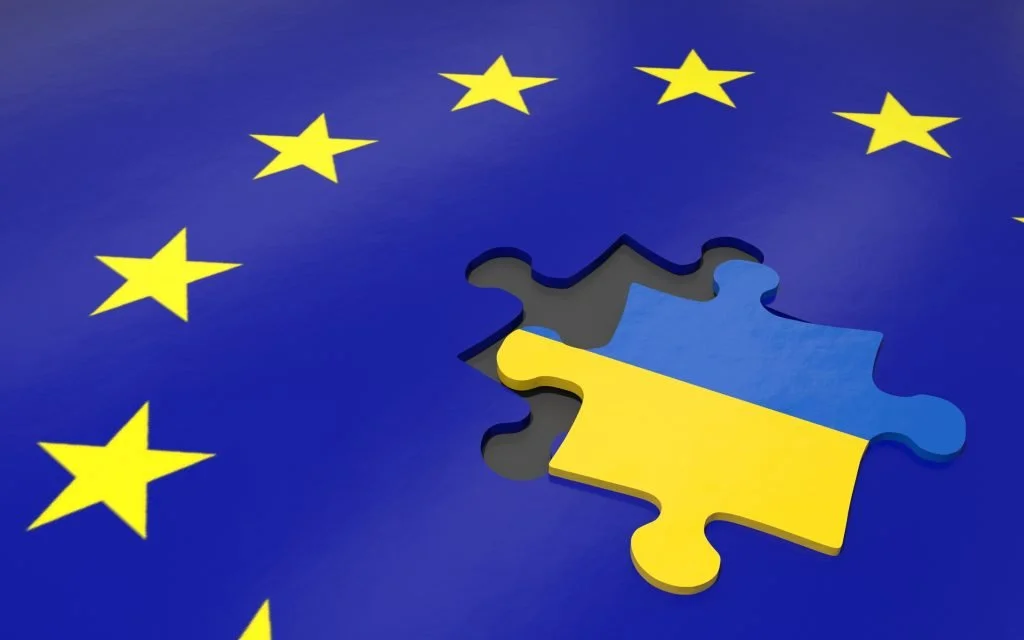
Part II: Ukraine’s (Extraordinary) EU Accession: Security, Politics, and Strategic Necessity
Editor’s Note
Ukraine’s accession to the European Union has increasingly moved beyond the realm of technical enlargement policy and into the center of Europe’s geopolitical and security debate. As Russia’s war against Ukraine continues to reshape the European security order, questions surrounding enlargement are no longer confined to procedural benchmarks or institutional sequencing. They now concern deterrence, strategic credibility, and the future direction of the European project itself.
On 8 May 2026, members of PILPG’s Ukraine Peace Negotiations Working Group convened for a second roundtable discussion examining whether the current geopolitical moment requires the European Union to rethink how accession itself is approached during wartime. Building on an earlier discussion focused on enlargement as a strategic imperative, participants explored the political feasibility of “extraordinary accession,” the domestic constraints facing member states, the relationship between EU membership and European security, and the broader institutional implications of Ukraine’s candidacy for the European Union.
Across the discussion, one theme consistently emerged: Ukraine’s accession is no longer viewed solely as a future enlargement question. It has become a test of whether the European Union can adapt its political and institutional tools to a radically altered security environment.
1. Extraordinary Times and Extraordinary Accession
Dr. David Crane, Founding Chief Prosecutor of the UN Special Court for Sierra Leone and Founder of the Global Accountability Project
Russia’s full-scale aggression against Ukraine fundamentally changes the logic of enlargement. In ordinary circumstances, a lengthy procedural accession process may appear entirely reasonable. But aggression on this scale, occurring in the heart of Europe, creates circumstances that many participants viewed as exceptional. From this perspective, accession becomes more than a technocratic exercise, it rather becomes a strategic political signal. A prolonged 12–14 year process risks reinforcing precisely the kind of strategic ambiguity the Russian state has historically exploited. Time and distraction remain among Vladimir Putin’s greatest strategic advantages.
Extraordinary accession, therefore, is not necessarily about bypassing reforms or eliminating conditions altogether. Rather, it reflects the argument that wartime enlargement may require different sequencing, where political commitment and strategic anchoring precede full technical completion rather than follow it years later.
Prof. Milena Sterio, the Joseph C. Hostetler-BakerHostetler Professor of Law at Cleveland State University College of Law and Managing Director at the Public International Law and Policy Group
Ukraine’s case differs fundamentally from previous enlargement rounds because the war itself is directly connected to Ukraine’s European aspirations. This is not simply a country that happens to be at war while seeking accession. The conflict itself emerged, in part, from Ukraine’s sovereign decision to pursue a European future. That distinction transforms accession into something larger than enlargement policy alone. Political integration into Europe increasingly becomes part of Europe’s response to attempts to violently reverse a sovereign democratic choice.
Ambassador Jorge Lomonaco, former Ambassador of Mexico to the UN Human Rights Council, and to the Organization of American States
At the same time, translating this strategic logic into EU policy remains politically difficult. Brussels is institutionally designed around procedure, consensus-building, and gradual sequencing. The European Union has historically struggled to operate outside established frameworks, even during periods of geopolitical disruption.
An accelerated or politically exceptional accession model would therefore require the EU to think in ways that are largely unfamiliar to its institutional culture. It would also further shift responsibility for European security toward Europe itself, reinforcing that Ukraine’s future is increasingly a European strategic question.
Kateryna Kyrychenko, Head of Ukraine Legal Affairs and Program Management at the Public International Law and Policy Group
For Ukraine, accession cannot be separated from the origins of the war itself. The 2014 Revolution of Dignity and the Association Agreement process reflected a broader societal choice in favor of sovereignty, democracy, and European integration. These aspirations became one of the core triggers of Russian aggression. From the Ukrainian perspective, leaving the country in a prolonged geopolitical “grey zone” does not preserve stability. It risks perpetuating the vulnerability that Russia has consistently sought to exploit.
2. The Real Obstacles: EU Domestic Politics and Enlargement Fatigue
Dr. Paul R. Williams, Rebecca I. Grazier Professor of Law and International Relations at American University and Co-Founder of the Public International Law & Policy Group
A major challenge is no longer simply whether European leaders support Ukraine’s eventual accession, but how that accession is framed politically within member states themselves. While many governments publicly support Ukraine’s European future, domestic political realities increasingly shape how far and how quickly those commitments can translate into policy.
A widening gap remains between the geopolitical arguments surrounding Ukraine’s accession and the procedural language through which enlargement continues to be discussed in Brussels. Concerns surrounding fiscal redistribution, institutional balance, and domestic political backlash remain politically salient across many European countries. Support for Ukraine’s accession is therefore often expressed through the language of sequencing, criteria, and technical readiness rather than strategic necessity. If accession continues to be framed primarily as a technical enlargement exercise, domestic political caution is likely to dominate the conversation. Framing accession instead as part of Europe’s long-term security and strategic stability may prove more politically persuasive across member states.
Emma Bakkum, Counsel at the Public International Law and Policy Group
Support for Ukraine and support for accelerated accession are not always politically identical positions within European capitals. In countries such as the Netherlands, support for Ukraine remains strong, including support for eventual EU membership. Yet this support often remains tied to the expectation that accession proceeds according to established procedures and institutional rules.
Fiscal redistribution, voting balances inside EU institutions, and the implications of integrating a large wartime economy continue to shape domestic political debate. These concerns are often less about opposition to Ukraine itself than uncertainty about how enlargement would reshape the Union internally. Governments may support Ukraine strategically while still needing to justify accession politically to electorates increasingly shaped by Euroscepticism, economic caution, and political fragmentation.
Greta Ramelli, Legal Officer, Program Manager at the Public International Law & Policy Group
Enlargement fatigue continues to influence public opinion across Europe. Earlier rounds of expansion, and the political tensions that followed them, continue to shape perceptions of future enlargement today. In this context, skepticism toward Ukraine’s accession is often tied not only to Ukraine itself, but also to broader concerns about institutional cohesion, democratic backsliding, and the long-term direction of the European Union after previous enlargement rounds.
At the same time, public conversations surrounding security and defense have shifted significantly in Europe. As the European security environment evolves and uncertainty surrounding transatlantic commitments grows, debates once viewed as non-urgent, including stronger European defense structures, are increasingly entering the mainstream. Thus, it is important to understand Ukraine’s accession in light of the EU's future geopolitical role, security capacity, and ability to strengthen the EU in an increasingly unstable international environment.
Chris Goebel, Senior Legal Advisor at the Public International Law and Policy Group
Many of the concerns surrounding “absorption capacity” or institutional readiness are real. Yet they also function as politically acceptable ways of expressing broader hesitation about enlargement itself. Reframing Ukraine’s accession as strengthening European security and strategic resilience, rather than simply expanding the Union geographically, may therefore become essential for building domestic political support.
3. Ukraine as a Security Contributor, Not Only a Security Consumer
Major General Darrell Guthrie, US Army (Ret.), PILPG Senior Peace Fellow
Ukraine’s wartime experience has fundamentally changed what it brings to the European Union. Rather than approaching accession solely through the lens of reconstruction costs or institutional burden-sharing, the discussion should also include Ukraine’s military and strategic value to Europe itself. Years of full-scale war have transformed Ukraine into one of the most operationally experienced military actors in Europe, particularly in areas such as autonomous systems, battlefield innovation, intelligence integration, drone warfare, and modern conventional combat. These are capabilities many European states are now attempting to rapidly develop themselves.
Ukraine increasingly appears not simply as a future recipient of European security guarantees, but as a contributor to Europe’s evolving security architecture, capable of strengthening the Union strategically, politically, and institutionally.
Chris Goebel, Senior Legal Advisor at the Public International Law and Policy Group
This shift intersects directly with broader debates surrounding European strategic autonomy. In countries such as France, discussions about strengthening Europe’s independent defense capacity have intensified amid uncertainty surrounding long-term American commitments to European security.
In that context, Ukraine’s military experience and defense innovation increasingly appear less as liabilities and more as strategic assets. Ukraine’s accession therefore becomes tied not only to enlargement policy, but also to wider debates about Europe’s future defense coordination and geopolitical resilience.
Greta Ramelli, Legal Officer, Program Manager at the Public International Law & Policy Group
Public conversations surrounding European security have already begun shifting. Ideas previously viewed as politically unrealistic, including stronger collective European defense structures, are increasingly entering mainstream debate. Ukraine’s accession now unfolds against this broader reassessment of Europe’s security infrastructure.
Ambassador Zorica Marić-Djordjević, former Head of the Permanent Mission of Montenegro to the World Trade Organization and Special Representative of Montenegro to the UN Human Rights Council
Ukraine’s accession debate also raises a deeper question about the European Union’s own security capacity. While Article 42.7 of the Treaty on European Union is often discussed as a potential security guarantee for Ukraine, its practical credibility would depend on far greater operational clarity and institutional preparation than currently exist. Questions surrounding the scope of assistance, coordination mechanisms, force generation, and the interaction between EU and NATO structures remain only partially resolved.
Russia’s war against Ukraine has therefore exposed not only the geopolitical importance of enlargement but also the limits of the European Union’s current defense architecture. In practice, Ukraine’s long-term security would likely continue to depend heavily on NATO capabilities, American strategic support, and bilateral security arrangements unless the EU moves toward substantially deeper defense integration.
4. Could Ukraine’s Accession Transform the European Union Itself?
Kateryna Kyrychenko, Head of Ukraine Legal Affairs and Program Management at the Public International Law and Policy Group
Russia’s full-scale invasion has exposed structural limitations within the European Union itself. Many EU institutional mechanisms were designed for a significantly less tense and confrontational geopolitical environment, one in which large-scale interstate war on the continent appeared unlikely. The war has highlighted weaknesses in areas such as defense coordination, strategic decision-making, and unanimity requirements, particularly where individual member states can obstruct sanctions, military assistance, or broader foreign policy responses.
Ukraine’s candidacy may therefore become a catalyst for long-discussed institutional reforms inside the Union itself. Rather than simply adapting Ukraine to Europe, the accession process may increasingly require Europe to adapt to a fundamentally different strategic environment.
Stephanie Gusching, Associate at White & Case, secondee at the Public International Law and Policy Group
Ukraine’s accession also presents Europe with a broader geopolitical opportunity. At a moment of growing geopolitical fragmentation, the European Union has an opportunity to demonstrate political cohesion and strategic leadership. In this sense, enlargement becomes tied not only to Ukraine’s future, but also to Europe’s broader role within an increasingly unstable international system.
Chris Goebel, Senior Legal Advisor at the Public International Law and Policy Group
Concerns about accelerated accession are tied to broader debates within the EU itself, particularly in countries such as France and Germany, where fears about institutional dilution remain strong. Calls for treaty reform before enlargement often reflect concerns about preserving political balance inside the Union.
In this context, phased integration may offer a more politically realistic path forward. Political commitment and strategic integration could move ahead earlier, while technical harmonization continues over time. This would not be entirely unfamiliar to the EU, which has long operated through different speeds and levels of integration across policy areas. Ukraine’s accession is becoming part of a much larger conversation about Europe’s future security role, strategic autonomy, and institutional development.
Ambassador Joachim Rücker, former Special Representative of the UN Secretary-General and Head of the UN Mission in Kosovo
Recent discussions inside the European Union suggest that the political understanding of “extraordinary accession” may itself be evolving. While many European leaders increasingly recognize the geopolitical exceptionalism of Ukraine’s candidacy, the emerging consensus appears less focused on immediate accession followed by phased integration, and more on accelerated phased integration as a bridge toward eventual full membership.
This approach appeared to gain traction during the April informal European Council discussions in Cyprus. Under such a model, the “extraordinary” nature of Ukraine’s accession would lie not in bypassing the accession process altogether, but in creating unprecedented forms of early integration prior to formal membership. German Chancellor Friedrich Merz publicly outlined elements of this approach, including closer Ukrainian participation in EU institutions, gradual integration into specific policy areas depending on reform progress, and discussions surrounding a possible form of “associated membership” that would grant Ukraine significantly greater institutional participation before full accession. According to proposals reportedly circulated among EU leadership, such a status could include participation in meetings of the Council of the European Union and the European Council, phased integration into parts of the EU budget and institutional framework, and, most significantly, the possible extension of the EU’s mutual assistance and defense clause to Ukraine. Such arrangements could also require greater use of differentiated integration mechanisms within the EU itself.
The discussion is also beginning to extend beyond Ukraine alone. In February 2026, Albanian Prime Minister Edi Rama and Serbian President Aleksandar Vučić jointly proposed that EU candidate states should gain earlier access to structures such as the internal market and the Schengen area before full accession. Such proposals suggest that phased integration may increasingly emerge as part of a broader rethinking of enlargement during a period of geopolitical instability.
For Ukraine and its partners, this may carry an important strategic implication: if phased integration is becoming the politically realistic pathway, the focus may increasingly turn toward maximizing the substance and political significance of these intermediate stages. Proper political framing will be essential to ensure that phased integration is understood not as postponement, but as irreversible strategic anchoring within the European Union.
Ambassador Zorica Marić-Djordjević, former Head of the Permanent Mission of Montenegro to the World Trade Organization and Special Representative of Montenegro to the UN Human Rights Council
The Western Balkans remain an important reference point in discussions surrounding Ukraine’s accession, particularly as a reminder of how enlargement processes can become stalled by bilateral disputes, veto politics, and enlargement fatigue despite formal EU commitments to accession. Ukraine’s trajectory has differed markedly in speed and political prioritization, reinforcing the sense that the European Union increasingly views Ukraine’s accession not solely as a technocratic process, but as part of a broader strategic and security imperative.
5. The Strategic Risks of Delay
Dr. David Crane, Founding Chief Prosecutor of the UN Special Court for Sierra Leone and Founder of the Global Accountability Project
Delay itself carries geopolitical consequences. Prolonged hesitation risks reinforcing the very strategy the Russian state has pursued throughout the war: exploiting distraction, exhausting political attention, and relying on institutional caution to slow European decision-making. Time becomes part of the strategy.
Europe may already recognize the broader geopolitical logic behind Ukraine’s accession, yet still remain reluctant to translate that logic into political action. A lengthy accession process risks creating exactly the kind of uncertainty and drift that Russia has consistently sought to preserve.
Prof. Milena Sterio, the Joseph C. Hostetler-BakerHostetler Professor of Law at Cleveland State University College of Law and Managing Director at the Public International Law and Policy Group
The current moment may ultimately require forms of political creativity that the EU has historically been reluctant to embrace. Accelerated political integration would not eliminate the need for reforms, technical harmonization, or institutional adaptation. But it would require treating accession as part of Europe’s broader security response, rather than as a process insulated from the war that made the question so urgent.
Kateryna Kyrychenko, Head of Ukraine Legal Affairs and Program Management at the Public International Law and Policy Group
The broader danger lies in treating prolonged ambiguity as a neutral or stabilizing outcome. Leaving Ukraine outside durable European structures would not freeze the geopolitical situation in place; it would preserve a space of continued vulnerability and instability on Europe’s eastern border.
At this stage, the debate is no longer only about technical readiness or procedural sequencing. Russia’s war against Ukraine has already exposed the limits of many assumptions on which Europe’s post-Cold War security order was built. The question now is whether the European Union is prepared to respond to that changed reality, including by adapting mechanisms that were designed for a far less confrontational environment.
Ukraine’s accession has therefore become tied to a much broader issue: how Europe defines its own future in a period of sustained geopolitical confrontation.
Ambassador Zorica Marić-Djordjević, former Head of the Permanent Mission of Montenegro to the World Trade Organization and Special Representative of Montenegro to the UN Human Rights Council
Another strategic risk lies in tying Ukraine’s European future to broader peace negotiations. While EU accession formally remains a sovereign process governed by EU criteria, prolonged diplomatic bargaining could create informal pressure to slow or condition integration in exchange for ceasefires, sanctions relief, or broader settlement arrangements. Maintaining a clear separation between accession and territorial bargaining may therefore become essential for preserving both the credibility of enlargement policy and Ukraine’s sovereign political choices.
Concluding Observations
The discussion reflected a growing sense that Ukraine’s accession debate has entered a fundamentally different phase. The central question is no longer simply whether Ukraine belongs within the European Union, but whether the Union itself is capable of responding politically to the strategic realities created by Russia’s war.
A widening gap remains between Europe’s geopolitical rhetoric and the procedural caution that continues to define enlargement policy in practice. While a few contributors dismissed the importance of reforms, institutional balance, or domestic political constraints, many questioned whether existing accession frameworks were designed for circumstances of this magnitude. In that sense, the debate surrounding “extraordinary accession” ultimately became a broader debate about the EU’s capacity for political adaptation during a crisis.
At the same time, the discussion suggested an important shift in perspective: Ukraine is increasingly viewed not only as a state seeking integration into Europe, but as a country already reshaping Europe’s understanding of security, defense, and strategic resilience. Rather than existing at the margins of Europe’s future, Ukraine has become central to many of the debates now redefining it.
Whether the European Union ultimately chooses a conventional accession path or develops more flexible political mechanisms, delay is not a neutral policy choice. The longer uncertainty persists, the more difficult it becomes to separate enlargement policy from the wider geopolitical contest unfolding across Europe itself.